
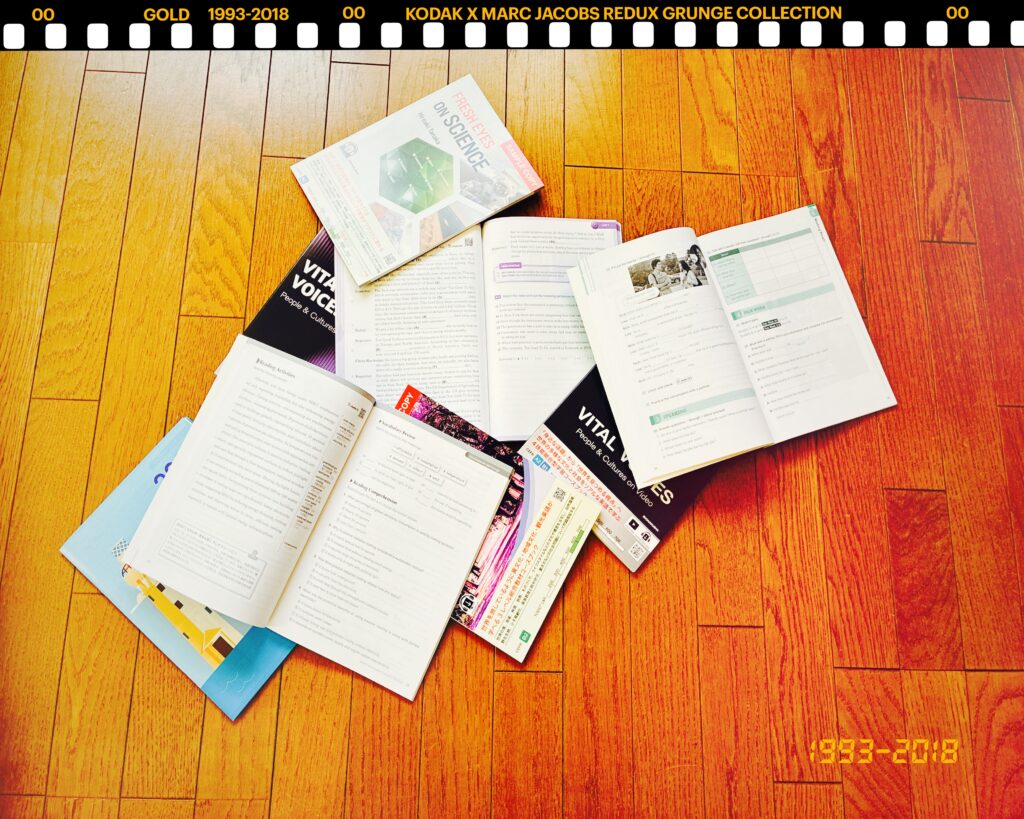
The first post in this series discussed why textbooks remain widely used in ESL classrooms and how they support both teachers and learners. Despite these strengths, textbooks also come with limitations that can affect how students experience language learning. Sometimes, these limitations contribute directly to problems with motivation, engagement, and classroom dynamics.
In my experience, I have met teachers who use poorly designed, bland, or inappropriate textbooks and then blame students for a lack of enthusiasm or participation. Before blaming students, it is often worth examining the materials we are using and how we are using them. As mentioned in the previous post, teachers do not always have control over which textbook is adopted. However, we usually have some control over how it is used in the classroom. Many of the limitations of textbooks become clearer when we consider what current research says about language learning. This post explores the weaknesses of textbook-centred instruction and highlights research-supported approaches that can complement or extend textbook-based teaching.
Visual Design and Appeal
Visual design is one area where textbook quality varies widely. Some textbooks suffer from poor layout, weak illustrations, limited colour use, or generic stock imagery. If the underlying content is strong, these design issues may not seriously hinder learning, although this is often not the case. At the other extreme, some textbooks rely heavily on flashy visuals or polished graphics while offering shallow or poorly sequenced content. In these cases, visual appeal can mask deeper pedagogical weaknesses. Selecting a textbook based primarily on appearance rarely leads to better learning outcomes.
Ultimately, the issue comes down to priorities and the ability to evaluate materials critically. Teachers need to consider their goals for the course and how much time and effort they are willing or able to invest in adapting a textbook for their specific context. Visual appeal alone is not enough, but neither is solid content presented in an inaccessible way. The sections that follow outline research-supported approaches that can be used to supplement any textbook and address these gaps more effectively.
Textbooks Often Miss the Specific Needs of Learners
One of the most common criticisms of textbooks is that they attempt to appeal to a broad audience. Publishers design materials for global markets, which often results in generic themes, predictable topics, and simplified cultural representations. Most textbooks also follow a fixed sequence of grammar points and themes. This structure may work for some classes, but it rarely aligns perfectly with the learners in front of us. Students may struggle to connect with the characters, situations, or topics presented. A large-scale review of textbook content research found that numerous textbooks lack cultural diversity and rely on universalized or idealized representations of daily life (Xu & Ye, 2025).
Learners within the same class rarely share identical goals, backgrounds, or levels of readiness. According to a systematic review of textbook evaluation studies, numerous textbooks do not adequately align with learner requirements, prompting educators to regularly modify, omit, or reorganize content (Li et al., 2023). This misalignment does not mean textbooks are unusable, but it does highlight the need to treat them as flexible resources rather than complete solutions.
Textbook Language Can Feel Artificial or Overly Simplified
Another well-documented issue concerns the authenticity of textbook language. Dialogue is often written to highlight a target grammar point rather than to reflect real conversation. This can result in interactions that feel overly polite, evenly structured, or predictable. Such input does not always reflect how people actually speak in everyday situations. Several studies have shown that textbook dialogues differ from authentic spoken corpora in timing, vocabulary use, hesitations, and turn-taking patterns (Pan & Zhu, 2022).
Textbook audio materials often reflect the same limitations and do little to prepare students for decoding meaning from authentic speech. Learners who rely solely on textbook language may struggle when exposed to real conversations, which are typically faster, less structured, and more variable. Exposure to authentic input plays an important role in developing listening flexibility, natural phrasing, and pragmatic competence.
A Strong Focus on Grammar Can Limit Communicative Development
Although various textbooks describe themselves as communicative, the activities they contain often rely heavily on controlled practice. Fill in the blank exercises, drills, and predictable dialogues continue to dominate many units. Textbooks may include discussion questions, but these are often short, scripted, or tightly constrained. These activities can help build accuracy, but they do not always support the development of spontaneous communication. Research suggests that learners need opportunities to negotiate meaning, respond creatively, and interact without knowing exactly what their partner will say (Xu & Ye, 2025).
This can result in classrooms that appear active while offering limited opportunities for authentic language use. Teachers who rely heavily on textbooks may unintentionally restrict learners’ chances to engage in the kinds of interactions that support communicative competence. Educators often make adjustments by expanding activities or developing extra communicative tasks, which suggests a structural deficiency in many textbooks. The surface appearance of communication rarely matches the deeper communicative skills learners need.
Textbooks Are Not Always Effective for Specialized Purposes
General English textbooks often cannot meet the needs of learners studying business English, academic English, or technical subjects. These learners require vocabulary, discourse patterns, and tasks that are specific to their fields. Teachers working in ESP or EAP contexts frequently report rewriting or supplementing large portions of textbook content to meet learner goals. This increases workload and reduces the usefulness of the textbook as a primary resource.
Research Supported Alternatives That Strengthen Learning
Although textbooks have clear limitations, research identifies several approaches that can complement or enrich textbook-based instruction. These methods provide more authentic exposure, deeper engagement, and stronger long-term learning outcomes. Importantly, they do not require abandoning textbooks entirely. Instead, they supplement classroom practice in ways that support communicative competence and sustained language development.
Input-Based Instruction
A systematic review published in 2025 examined studies on input-based instruction from 2010 to 2025 and found significant improvements in speaking accuracy, fluency, and overall communicative ability when learners received structured, meaningful input before producing language (Zhang et al., 2025). Approaches such as input enhancement, input flood, and meaning-focused activities allow learners to notice patterns and connect form to meaning in context.
These approaches contrast with the typical textbook sequence of presenting a grammar point, practicing it through controlled exercises, and ending with limited production. Input-based instruction offers richer opportunities to understand language before using it. Authentic content can be effective here, as language created for real communication is often clearer and more meaningful than artificially constructed textbook texts.
The timing of input also matters. Learners can benefit from the approach of starting with output, examining relevant, authentic input, and then returning to production after discussion and analysis (Cochrane & Cochrane, 2024; Cochrane & Cochrane, 2025).
Extensive Reading Builds Vocabulary, Fluency, and Confidence
Extensive reading is another research-supported alternative. A recent meta-analysis documenting decades of studies found improvements in reading fluency, comprehension, vocabulary development, and grammatical awareness (Sangers et al., 2025). Extensive reading exposes learners to large amounts of meaningful text, something textbooks struggle to provide because of their short, structure-driven passages.
Integrating extensive reading into a course helps students develop long-term reading habits and greater exposure to natural language patterns. Taking this one step further, students can be encouraged to locate and evaluate their own reading materials, particularly when connected to lesson themes. Sharing these materials with classmates can foster ownership and engagement. When peer evaluation is involved, students are often motivated to select higher quality material and take the task more seriously. This approach can be more engaging than relying solely on teacher-selected texts.
Task Based Learning Encourages Real Communication
Task-based learning focuses on meaningful communication and encourages learners to collaborate to complete authentic tasks. A review of two decades of research highlights consistent benefits for learner motivation, engagement, and communicative competence (Li, 2023). Tasks require genuine interaction, negotiation of meaning, and creative problem solving.
Some textbooks include task-like activities, although research suggests these are often procedural rather than communicative (Xu & Ye, 2025). Teachers who wish to apply task-based principles typically need to move beyond the textbook version of tasks. Effective implementation also depends on teacher training and institutional support, as exam pressure and traditional expectations can influence how tasks are used in practice (, 2022).
Moving Toward a Balanced Model
Across these two posts, I have argued that textbooks are neither the problem nor the solution. They remain central to ESL teaching because they offer structure, consistency, and practical support for both teachers and institutions. At the same time, their limitations are well documented. When used uncritically or followed too closely, textbooks can restrict opportunities for authentic communication, reduce learner engagement, and fail to reflect how language is actually learned and used.
A balanced approach recognizes both realities. Textbooks can provide a shared roadmap, especially in programs that require consistency across classes. Input-based instruction, extensive reading, and communicative tasks add what textbooks often lack: depth, authenticity, and sustained exposure to meaningful language. When these approaches are combined, classrooms become more flexible and more responsive to learner needs.
Moving toward this balance does not require abandoning textbooks or waiting for the perfect coursebook to appear. It requires teachers to make informed decisions about how materials are used. Teachers can begin by identifying which parts of a textbook genuinely support learning and which parts need adaptation. Authentic materials can be integrated to expose learners to real language. Tasks can extend textbook topics into meaningful communication. Extensive reading or listening routines can provide the volume of input that textbooks alone cannot supply.
Practical steps toward a more balanced classroom include the following:
- Treat the textbook as a framework rather than a script.
- Add authentic materials that reflect real language use.
- Develop tasks that connect lesson content to students’ lives.
- Include extensive reading or listening to increase exposure.
- Modify or skip sections that do not meet learner needs.
- Encourage learners to produce original content rather than reproduce textbook answers.
Ultimately, the goal is not to teach the textbook, but to teach learners. When textbooks are used deliberately and critically, they can support learning rather than constrain it. Combined with research-supported approaches and thoughtful teacher judgment, they can play a productive role in classrooms that prioritize communication, engagement, and long-term language development.
References
Cochrane, R. & Cochrane, Y. (2024). The Sandwich Production Method: Shifting the Paradigm from Passive to Productive. OnCUE Journal. 15(1). pp. 68-81. https://www.cochranesensei.com/wp-content/uploads/2025/07/Sandwich-Production-Method-published.pdf
Cochrane, R. & Cochrane, Y. (2025). Student Engagement through Production & Process-Oriented English Learning. International Academic Journal of Social Sciences. 12(1). pp.1-15. https://www.cochranesensei.com/wp-content/uploads/2025/07/Cochrane-Cochrane-2025-PPEL.pdf
Dao, H. (2022). Perspectives from Task-Based Language Teaching on EFL Textbook Use: A Participatory Action Research Study at a Vietnamese University (Version 2). Open Access Te Herenga Waka-Victoria University of Wellington. https://doi.org/10.26686/wgtn.19902346
Li, J. (2023). A Review of Studies on Task-based Language Teaching. Lecture Notes in Education Psychology and Public Media, 28, 190-195. https://lnep.ewapub.com/article/view/7543
Li, Y., Darmi, R., & Thai, Y. (2023). Systematic literature review on evaluation of English language textbooks: A decade of research. World Journal of English Language, 15(3), 65–83. https://doi.org/10.5430/wjel.v15n3p65
Pan, M., & Zhu, Y. (2022). Researching English language textbooks: A systematic review in the Chinese context (1964–2021). Asian-Pacific Journal of Second and Foreign Language Education, 7, Article 30. https://doi.org/10.1186/s40862-022-00156-3
Sangers, N. L., van der Sande, L., Welie, C., et al. (2025). Learning a language through reading: A meta-analysis of studies on the effects of extensive reading on second and foreign language learning. Educational Psychology Review, 37, 96. https://link.springer.com/article/10.1007/s10648-025-10068-6#citeas
Xu, J., & Ye, F. (2025). Two decades of research on ELT textbook content: A bibliometric and content analysis. Studies in Second Language Learning and Teaching. https://doi.org/10.14746/ssllt.39278
Zhang, Y., Fauzi, W.J. & Kassim, H. (2025). Input-based instruction as a teaching strategy for enhancing EFL speaking skills: a systematic review. Discov Educ 4, 534. https://doi.org/10.1007/s44217-025-01008-1



Leave a Reply