
Teachers are always searching for tools that improve organization, foster participation, and support student engagement. In this post I will take a more practical approach and talk about one of the most effective tools I have used over the years, which is also one of the simplest: name cards. These small, foldable pieces of paper have played a central role in my classes for more than sixteen years. Although they may appear low-tech and even a little old-fashioned, they offer a surprising number of instructional and administrative benefits. With some planning and adaptation, name cards can help streamline classroom routines, strengthen rapport, and guide students toward more active participation.
Why Name Cards Work
At their core, name cards serve two main purposes: classroom administration and student engagement. Administratively, they allow teachers to manage attendance quickly and consistently. They also support ongoing documentation of homework, participation, and assessment. On the engagement side, name cards can help students feel seen, and help teachers learn names far more effectively. Research and practitioner reports note that visible names facilitate more personal interaction and more balanced classroom participation (Head & Lyons, 2018; Helgesen, 2016).
Another advantage is flexibility. There is no correct or fixed way to design a name card. Over the years I have modified the layout depending on the course, the curriculum, the class size, and even the department. The template should evolve to match your needs and the needs of your students, but the core idea remains the same: name cards are tools that help both teachers and learners stay oriented and connected throughout the term.
Setting Up the Name Cards
A name card typically has two sides: the outside displays the student’s preferred name and a class code, and the inside contains student information and weekly class records. I usually print a simple A4 template that students fold in half. Inside, students fill in their full name, student number, email or LMS address, and a photo. I prefer a full-face photograph because it makes it much easier to learn names during the first few weeks of class. My students usually have passport style photos available at the beginning of the year for other university admin.
One of the most useful pieces of information I include is a class code, which is a short identifier based on the class day, period, and the student’s position on the roster (for example, M3-04 which would be Monday, 3rd period, 4th student on the class list). This code makes it easy to sort cards before class and quickly locate a specific student’s card when needed. Including the student code on student assignments also helps record grades.
I also include a week-by-week list of class dates. Students can write down the topic for each week, group members, homework checks, or important reminders. This section becomes a running log of their progress and participation. It also helps students keep track of the class schedule, especially on weeks when the timetable shifts because of holidays or university events.
The Picture Profile Activity
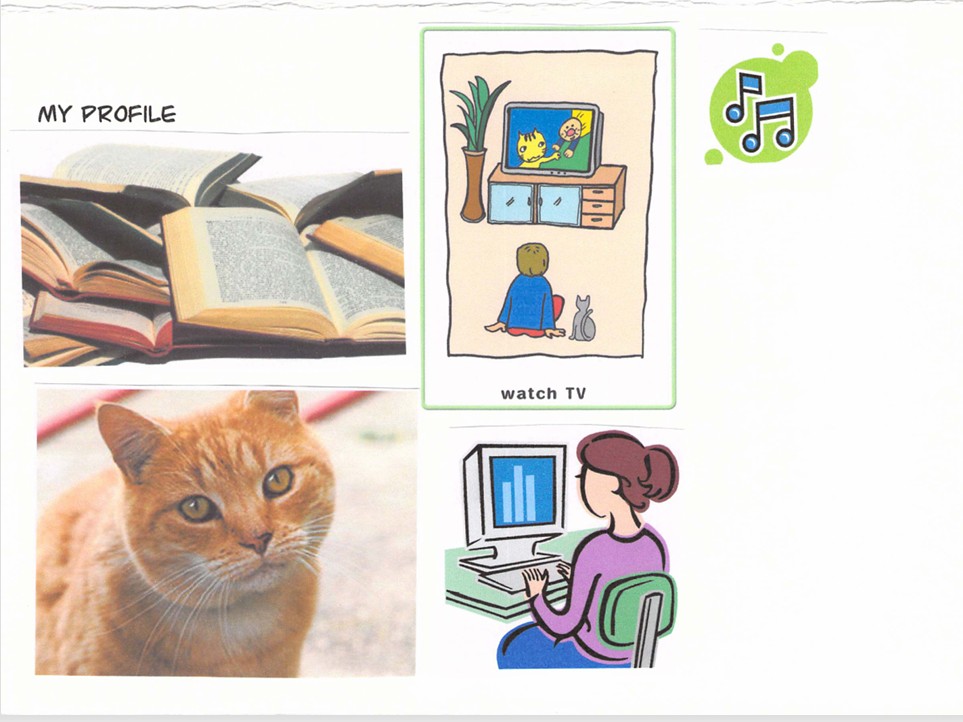
One optional, but highly effective, feature is the picture profile on the back of the card. Instead of writing a traditional self-introduction, students create a collage of images that represent their interests, hobbies, and personal identities. These can be hand-drawn, printed, or clipped from magazines.
During the second class of the semester, students share their picture profiles in small groups. This simple activity generates far more authentic conversation than a typical self-introduction and gives me an early sense of how engaged each student is. Some students hand in beautifully designed cards with artwork and thoughtful imagery. Others, of course, submit a minimal pencil sketch clearly done moments before class. Either way, the task provides an honest snapshot of student motivation and helps me anticipate how much support or encouragement each student will need during the semester.
Using Name Cards for Attendance and Classroom Management
Once the name cards are prepared, they become part of the daily routine. At first, I call out the names and hand out the cards so I can associate faces with names. After a couple of weeks, students simply pick them up as they enter the room. Any unclaimed cards indicate absences, and I can quickly verify attendance by doing a headcount and cross-checking the remaining cards. This process is far faster and more accurate than relying solely on electronic attendance systems.
At the end of class, students return their cards to a central desk. I may write notes, record homework results, or simply reorder the cards before the next session. Over time, the name cards become a compact record of each student’s engagement and consistency.
One method that has worked particularly well is a simple three-color system. I use green for strong work or full completion, blue for acceptable work, and red for incomplete or missing work. Halfway through the term, I often have students review their cards. A student with mostly green marks knows their performance is solid. A student with mostly red can immediately see they are at risk. This transparency helps prevent surprises at the end of the course and reduces complaints about grades.
Additional Benefits for Students and Teachers
The benefits of name cards extend far beyond attendance. Students receive regular feedback on their performance and participation, which keeps them accountable and engaged. The cards also serve as reminders of deadlines, group members, and class topics. Because the photo is included, the cards help me learn names much faster and build rapport with the class.
I also use a small stamp system for bonus participation points. Students who answer questions, solve puzzles, or make an effort to speak in class receive a stamp. While the stamps rarely affect the final grade, they motivate students to participate and give quiet students a reason to speak up without feeling self-conscious.
Potential Drawbacks
Name cards do come with a few minor challenges. Some students inevitably lose or forget their cards, which means recreating them. Others may attempt to mark attendance for absent friends, although this is usually easy to catch. Large classes can also require more time for sorting or reviewing cards. However, in my experience, the benefits far outweigh these inconveniences. Once the system is established, it becomes efficient and easy to maintain.
Conclusion
After many years of using name cards in different universities, courses, and class sizes, I can confidently say they are one of the most effective low-tech tools in my teaching practice. They help create a more personal and organized environment, support meaningful interaction, and give both teachers and students valuable information throughout the term. With a little experimentation, name cards can become a reliable and rewarding part of your ESL classroom routine.
References
Head, P., & Lyons, C. (2018). Name card classroom management. The Language Teacher, 42(3). https://jalt-publications.org/articles/24321-name-card-classroom-management
Helgesen, M. (2016, March 25). Learning names. Teaching Village. https://www.teachingvillage.org/2016/03/25/learning-names/index.html




Leave a Reply